
Gridwell moved Lifeworks off Squarespace, redesigned the practice on WordPress, then wrote 18 new service pages to make it rank. When WordPress itself became the constraint, we rebuilt all 92 pages as a static site and said so plainly.
The Client
Four Offices, Four Intensive Programs, and a Family Story at the Center
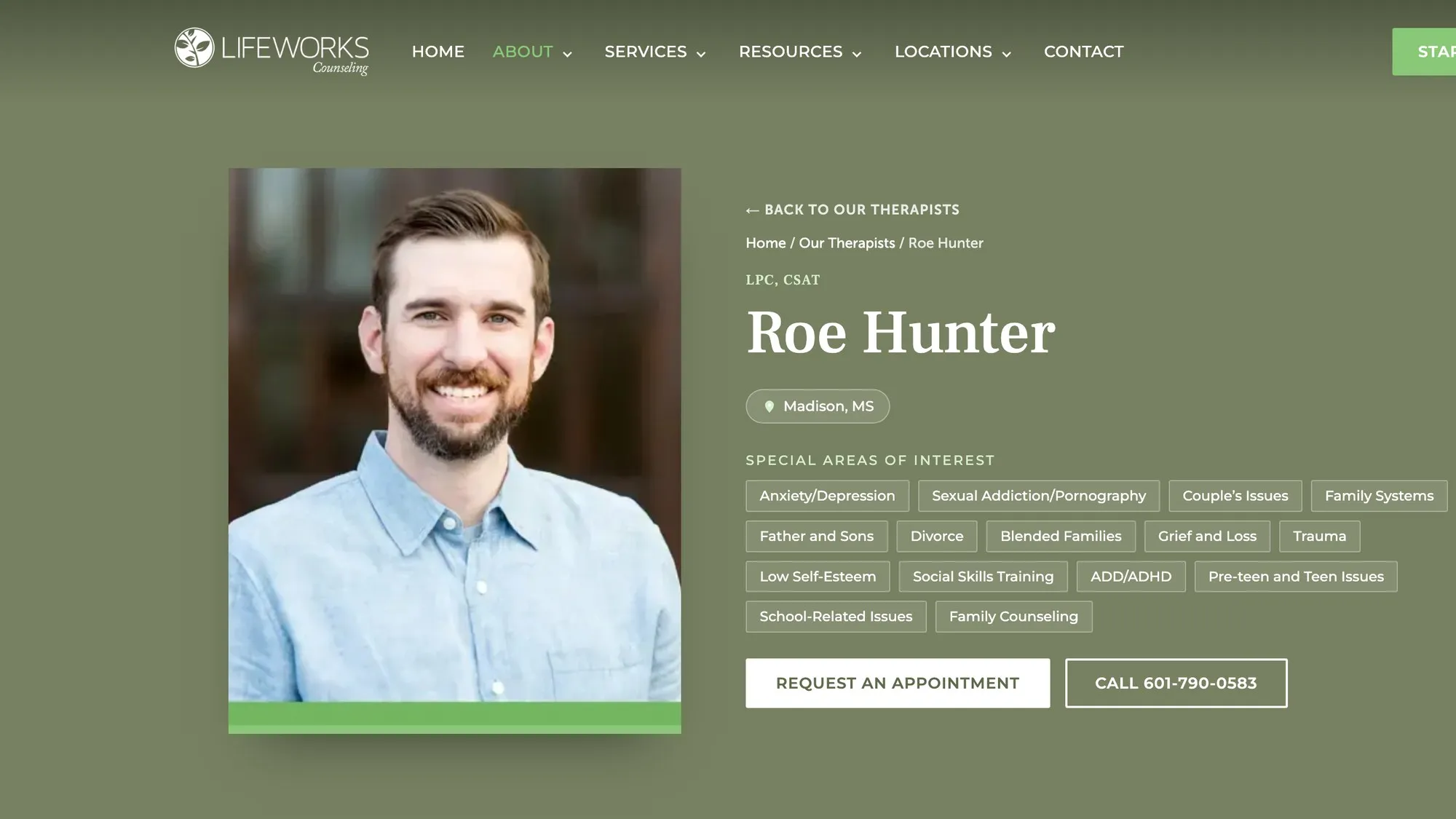
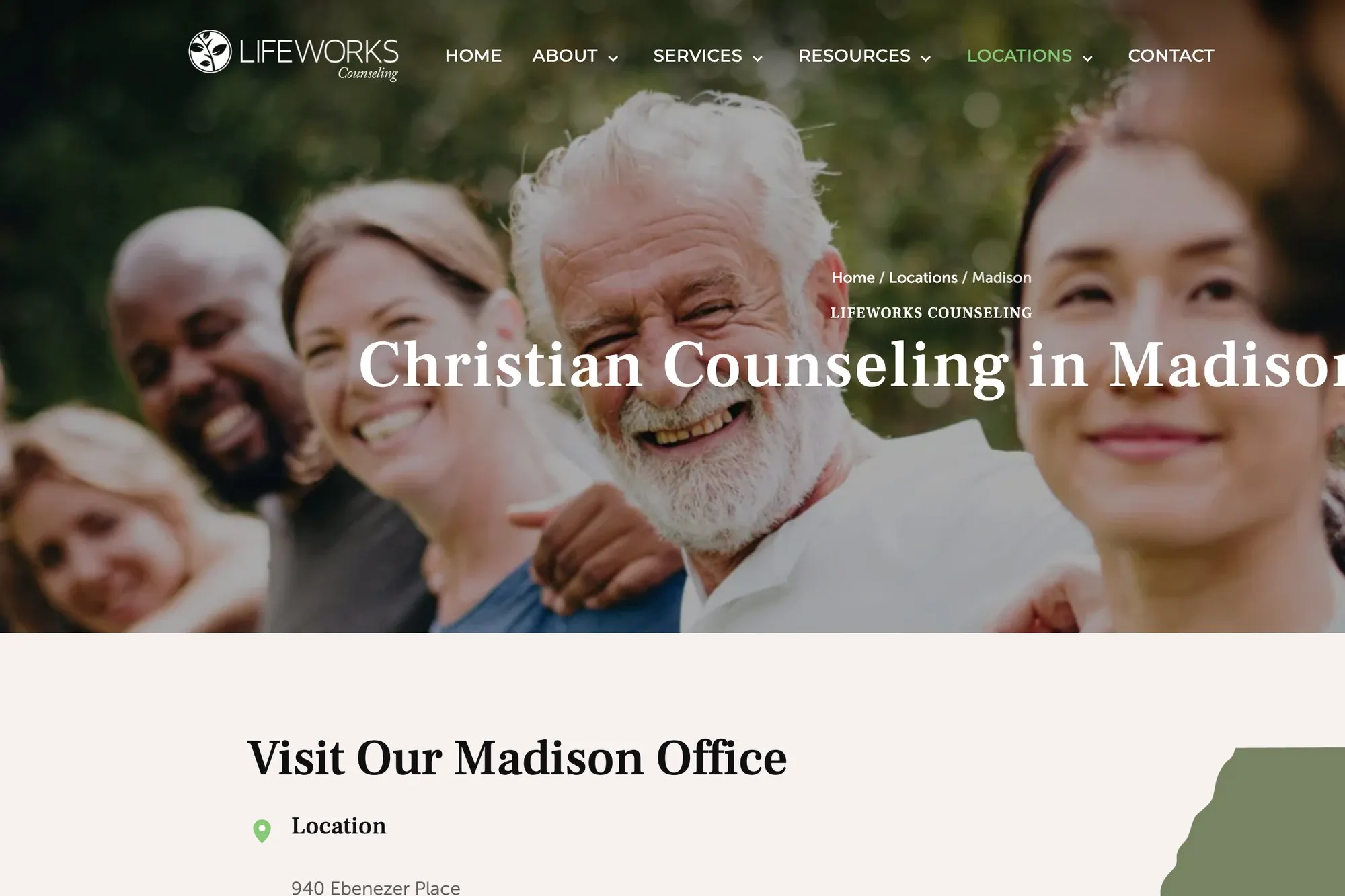
Lifeworks Counseling is a Christ-centered counseling practice with offices in Madison, Oxford, Southaven, and Starkville, Mississippi. Roane and Eva Hunter built it around the work they know most personally: marriage recovery, betrayal trauma, and sex addiction treatment. Their son Roe is a certified sex addiction therapist in the practice, which now publishes profiles for 22 therapists across the four offices.
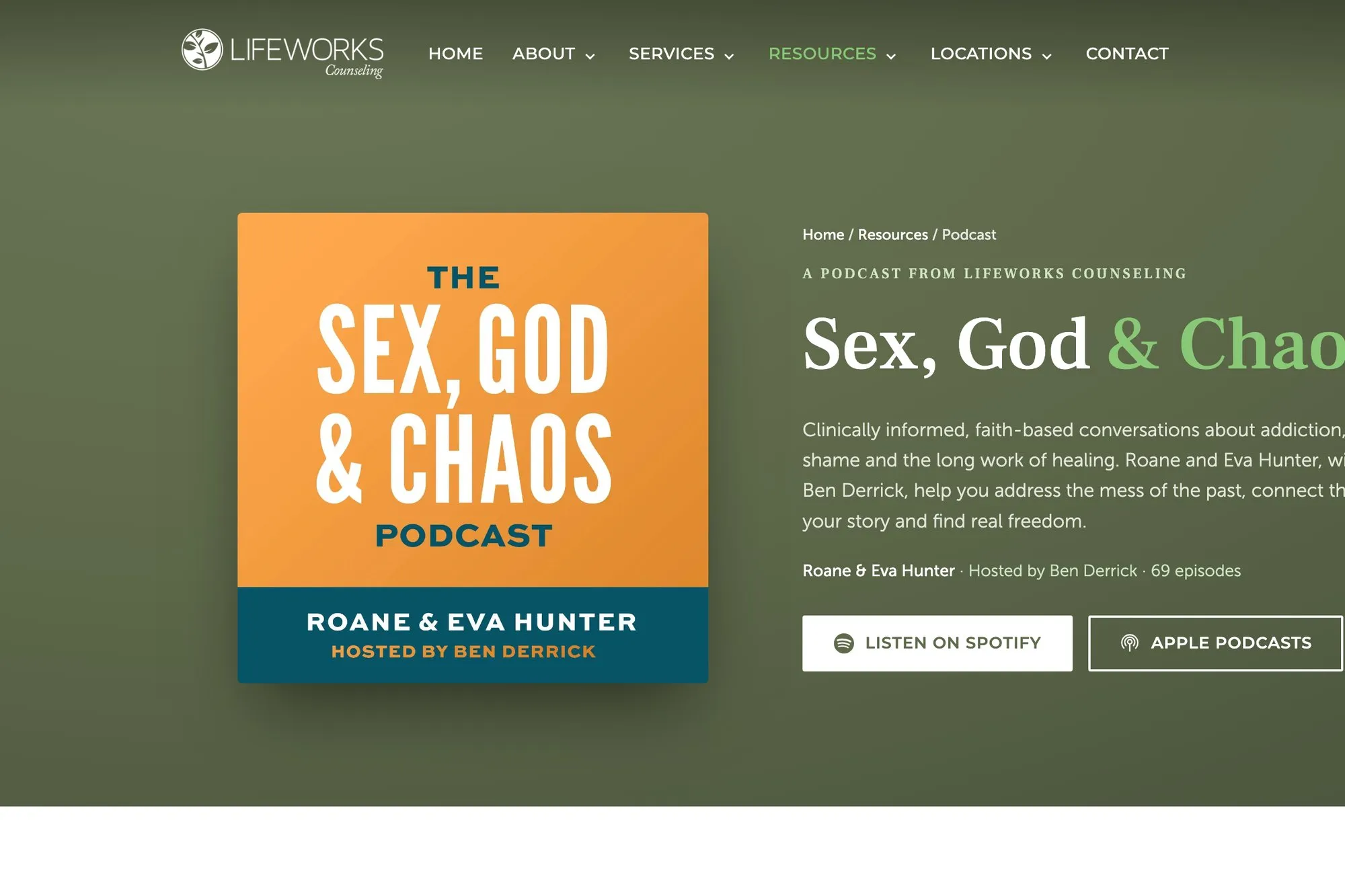
That specialty depth is unusual. Most counseling practices offer intensives as a side program. Lifeworks runs men’s, women’s, couples, and partner intensives as a core service, alongside a 69-episode podcast and clinical partnerships with Samson Society, Pinelake, Renewal Health Group, and Sarah Society.
The Challenge
The Site Could Describe the Practice. It Couldn’t Be Found.
Gridwell’s first engagement moved Lifeworks off Squarespace and onto WordPress with a full redesign. That solved the problem in front of us: the practice had outgrown a template, and it needed a site that looked like the organization it had become.
What the redesign did not solve was discovery. The site described the practice well to anyone who already knew the name — and almost nobody searching for help starts there. People search for what they are living through: a wife who just found out, a man who cannot stop, a couple deciding whether sixteen hours in a room together is worth it. Those queries had no page to land on.
The practice also competes against a name collision. Several unrelated organizations use some form of “LifeWorks” nationally, which splits brand search and gives search engines every reason to show someone else.
The Strategy
Build the Pages That Answer Real Searches
We wrote 18 new service pages that did not exist on the original site, in two phases.
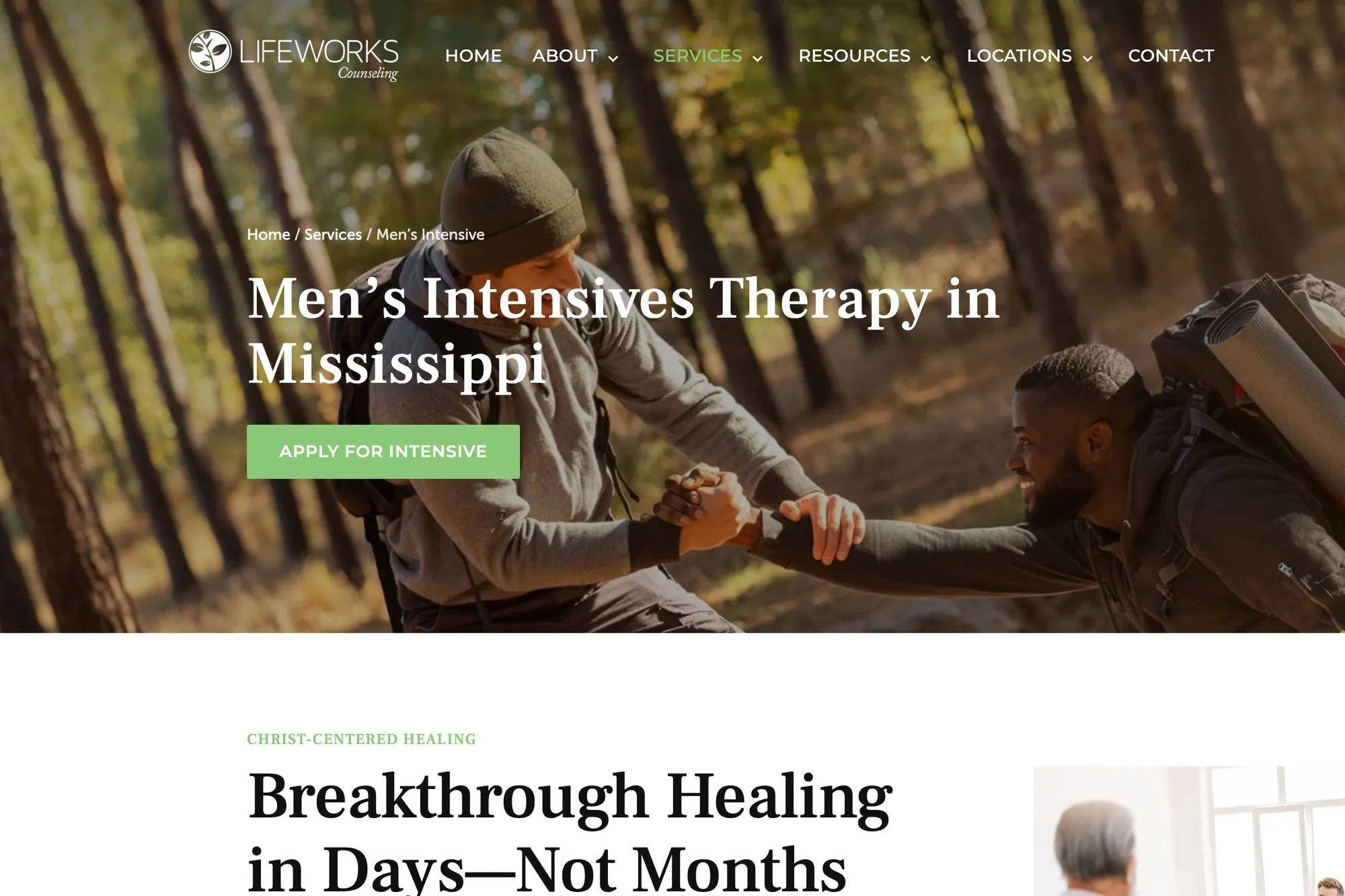
Phase one — high-intent pages, for people ready to act: Men’s Intensive, Women’s Intensive, Couples Intensive, Betrayal Trauma Intensive, Christian Intensives, Marriage Counseling, Christian Counseling, Addiction Therapy, Individual Therapy, and Family Therapy.
Phase two — niche authority pages, for the specific thing someone is actually searching: Porn Addiction Counseling, Sex Addiction Therapy (CSAT), Love Addiction Therapy, Betrayal Trauma Counseling, Affair Recovery Therapy, Codependency Therapy, Trauma Therapy, and Grief Counseling.
Each one follows the same structure: the problem, why ordinary therapy often isn’t enough, what the service actually is, who it’s for, how the process works, how faith is integrated, and what outcomes look like — then an FAQ written for the questions people really ask. That last section does double duty. It reads well for a person, and it gives answer engines something clean to quote.
The Rebuild
Why We Moved Them Off the Platform We Put Them On
Three things made WordPress the wrong place for this practice to keep growing.
Security. A WordPress site is a stack of plugins, each one a door. For a practice holding what this one holds, every avoidable door is worth closing. A static site has no database and no admin login to attack.
Speed. Every page loaded about 12 MB across roughly 195 requests — close to 100 stylesheets and 45 scripts, most of them from the theme and its plugins rather than anything Lifeworks needed.
Mobile. On a throttled mobile connection, the main content took 13.6 seconds to appear. The people arriving on these pages are often in crisis, usually on a phone, frequently at night. Thirteen seconds is a closed door.
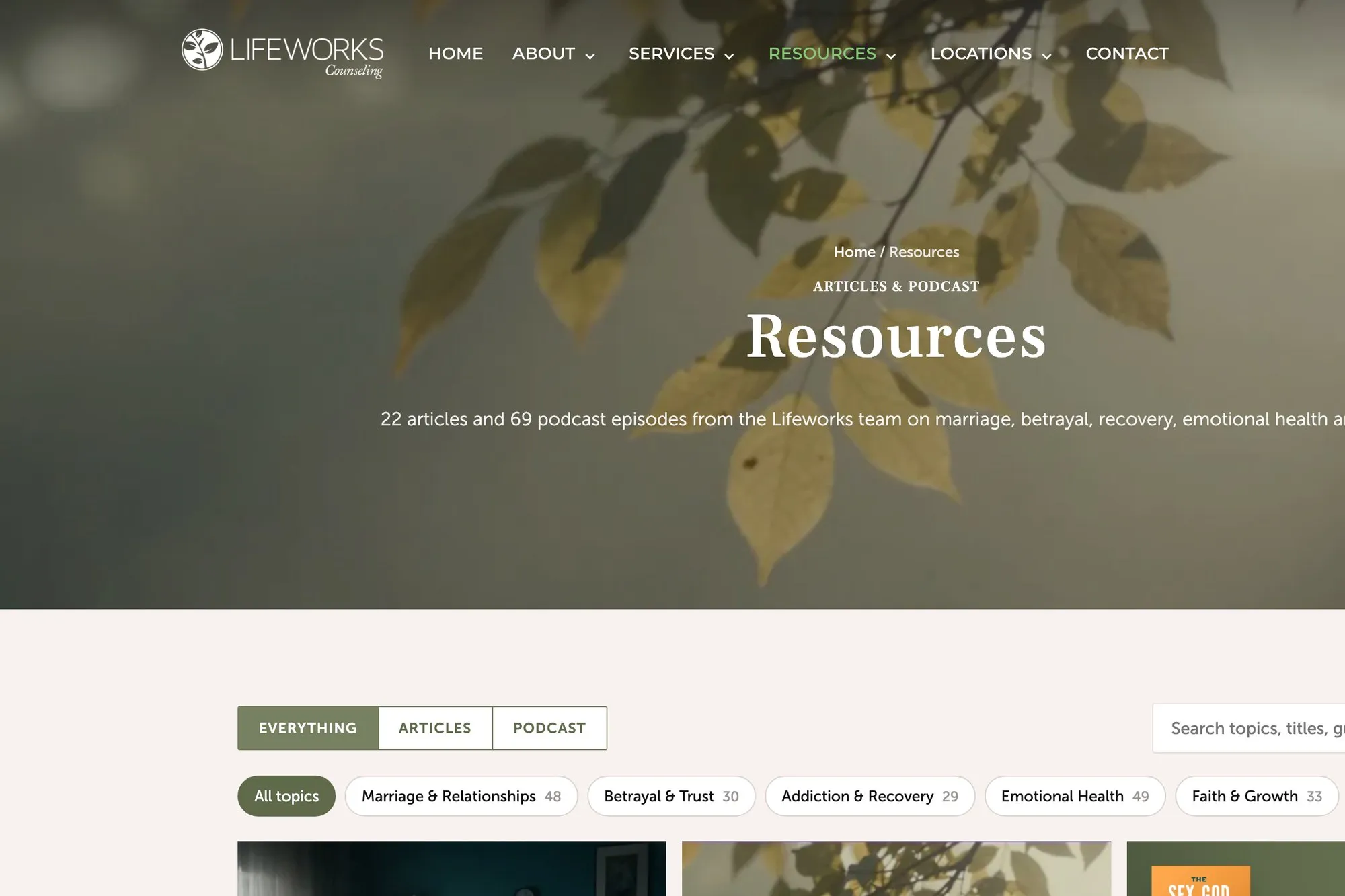
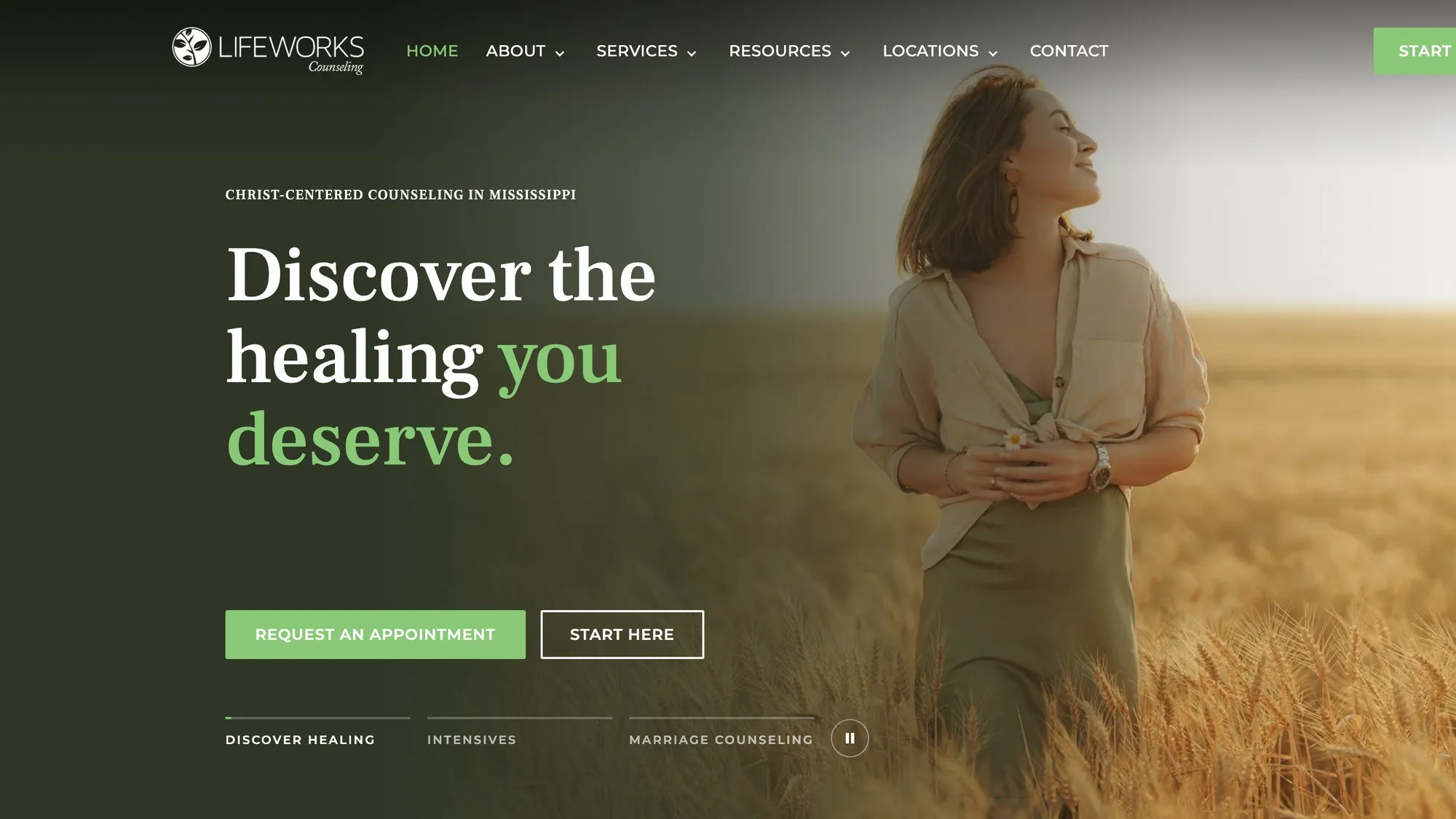
So we rebuilt all 92 pages as static HTML, matching the existing design exactly — the same cream and sage palette, the same typography. Every working URL carried over unchanged to protect the search equity the service pages had earned. Along the way the rebuild added a 19th specialty page for Oxford, a Resources hub that mixes 22 articles and 69 podcast episodes on one filterable timeline, a full podcast archive, three intensive registration pages rebuilt in the site’s own design, and redesigned profiles for all 22 therapists. The 18 service pages, which nothing had linked to, finally got a Services menu and a hub to live in.
The Results
Measured the Morning After Launch
The site went live on 10/23/2026. These are engineering and findability results, measured directly:
- 12 MB to 120 KB. The home page’s HTML, CSS, and JavaScript now total 120 KB across four files — three stylesheets and one script, down from roughly 145 of them.
- 13.6 seconds to 4.4. Largest Contentful Paint on mobile is 4.4 s on the image-heavy home page and 1.6 s on specialty pages.
- Lighthouse SEO and Best Practices: 100 on every page tested. Performance ranges from 81 on the home page to 100 on therapist bios.
- 92 of 92 pages clean. One H1 each, self-referencing canonicals, zero broken internal links, and alt text on every image.
- Named in 6 of 7 AI search queries. Perplexity returns Lifeworks for six of seven non-brand counseling queries in Mississippi, first in four of them.
- No attack surface. No database, no plugins, no admin login.
The Honest Picture
Two Things Worth Saying Plainly
The first is that we replaced our own work. The WordPress redesign was the right call for the problem we were hired to solve, and it served the practice for the time it was in place. It stopped being right when the requirements changed — when the service pages made search a real channel, and when speed and security mattered more than the convenience of a page builder. Recommending a client leave something you built is uncomfortable. It’s also the job.
The second is that the search results are not in yet. This goes up days after launch, so there is no traffic, ranking, or lead data to report, and Google is still serving the old pages from its index. What we can report is that the AI engines already name the practice more often than Google does.
The remaining work is mostly off the site. Lifeworks’ Google Business Profile and directory listings publish details that disagree with the practice’s own records, and AI assistants are repeating the wrong version to people asking for help. Google’s AI Overview for the brand name currently describes a different practice in another state — the name collision, doing exactly what we expected it to. We captured a full baseline on launch day so the next audit measures against something real rather than a memory.