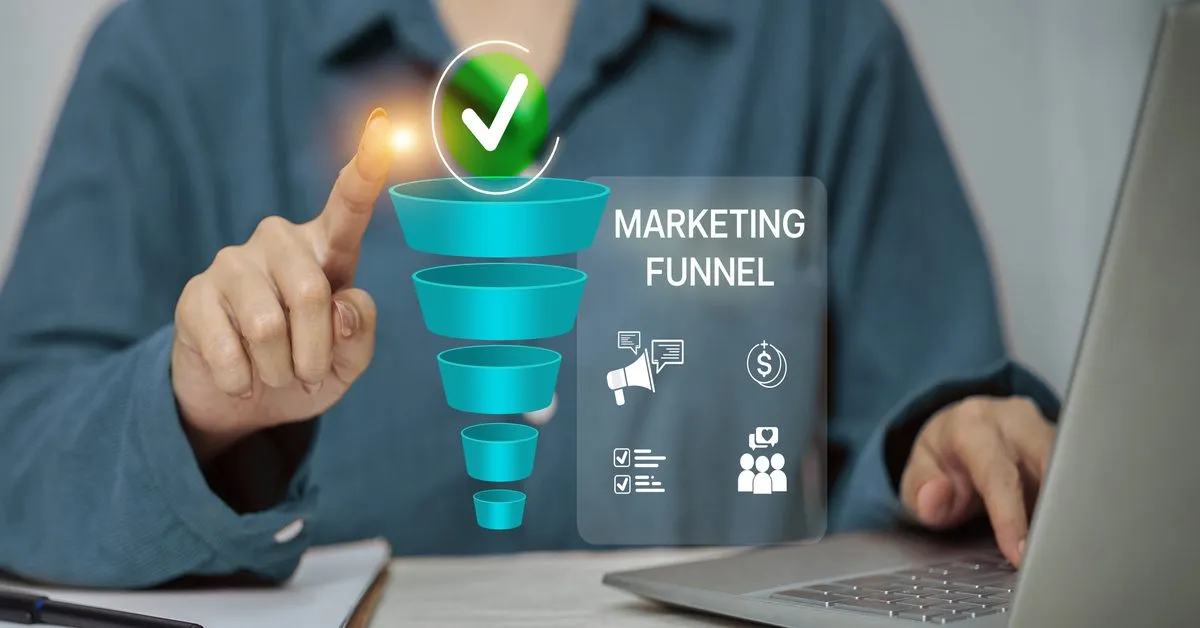


Performance marketing is marketing that is paid for and judged by measurable outcomes: leads, booked calls, purchases, and pipeline. It works when search, paid media, landing pages, and follow-up run as one system, with shared messaging and shared data. It fails when each channel is managed on its own, because spending rises while learning stays scattered.
Performance marketing promises measurable growth—but too often delivers rising costs and diminishing returns. The issue isn’t the channels. It’s the lack of alignment.
Why does performance marketing stop working?
When SEO, paid media, landing pages, and funnels operate in silos, performance becomes unpredictable. Spend increases without learning. Optimization happens in isolation. Results plateau.
Silos usually aren’t a strategy decision. They form over time. A company hires one vendor for Google Ads, another for social, a freelancer for the website, and someone in-house handles email. Each one reports on their own numbers, and each one can show that their piece is “working.” The ad agency reports a strong click-through rate. The SEO vendor reports more traffic. The website looks better than it did last year. Yet the number leadership actually cares about, qualified leads that turn into revenue, doesn’t move.
That gap exists because no one owns the whole path a customer takes. The ad makes one promise, the landing page makes a different one, the form asks for too much, and the follow-up arrives a day later from someone who doesn’t know which ad the lead clicked. Every handoff leaks. More budget pushes more people into the same leaks.
What are the warning signs of a fragmented performance program?
Most companies feel the problem before they can name it. These are the patterns we see most often:
- Cost per lead keeps climbing, and no one can say why. Each platform blames the other, or the market.
- Channel reports don’t agree with the CRM. Google, Meta, and your analytics each claim credit for the same conversions, and none of them match what sales sees.
- Every campaign sends traffic to the homepage. Visitors arrive with a specific question and land on a page built to say everything at once.
- Sales says the leads are bad. Marketing says sales doesn’t follow up. Both are partly right, and nobody is looking at the handoff.
- Testing means changing ad creative. Landing pages, offers, forms, and follow-up never get tested, even though they decide whether a click becomes a customer.
- SEO and paid search target different words. Organic content chases one set of topics while ads bid on another, and neither learns from the other.
- Budget decisions are made by habit. Spend shifts because a channel “feels” productive, not because the data shows where customers come from.
If three or more of these sound familiar, the problem isn’t a single channel. It’s the lack of a system connecting them.
What does a performance marketing system include?
Effective performance marketing is a system. Channels work together. Messaging aligns with intent. Data informs iteration. Funnels guide behavior. Testing is disciplined, not random.
In practice, that system has five connected parts:
1. Demand capture and demand creation, planned together. Paid search and SEO capture people who are already looking for what you sell. Paid social, video, and streaming TV reach people who fit your customer profile but aren’t searching yet. Both matter, but they do different jobs and should be measured differently. A system decides the mix based on how your buyers actually behave, not on which channel is fashionable.
2. Messaging matched to intent. Someone searching for an urgent repair needs a different message than someone scrolling past an ad for a service they haven’t considered. The keyword, the ad, the landing page headline, and the follow-up should all answer the same question in the same words. When they match, people convert. When they don’t, people leave.
3. Landing pages built for one decision. A good landing page answers one question, proves you can solve the problem, and makes one next step obvious. It loads fast on a phone. It asks only for what you need to follow up. It’s built to be tested, so you can learn which headline, offer, or form length works better.
4. Follow-up that’s connected to the campaign. The lead should land in your CRM with its source attached, get an immediate response, and move into a follow-up sequence that continues the conversation the ad started. Speed matters here. A lead you paid for and answered tomorrow is often a lead you’ve already lost.
5. One source of truth for results. Tracking should connect clicks, forms, calls, and closed deals so that every channel is judged by the same outcome. When the data lives in one place, you can see which campaigns produce customers, not just clicks, and move budget accordingly.
When performance is designed as an integrated engine, every dollar works harder. Learning compounds. Growth becomes scalable instead of fragile.
How do you turn scattered campaigns into a system?
You don’t need to rebuild everything at once. Most companies get further by fixing the system in this order:
- Define the outcome. Agree on what counts: a booked call, a qualified lead, a purchase. Decide what a customer is worth so you know what you can afford to pay to acquire one.
- Fix the tracking. Make sure every form, call, and booking is recorded once, with its source, in the CRM. Until this works, every other decision is a guess.
- Map the path. For your top two or three campaigns, write down every step from first impression to signed customer. Mark where people drop off and where handoffs break.
- Align the message. Rewrite the ads, landing pages, and first follow-up for each campaign so they make the same promise in the same language.
- Close the follow-up gap. Set up an instant response for every new lead and a sequence that continues until the lead books, buys, or opts out.
- Test what decides conversion. Run structured tests on headlines, offers, and forms, one variable at a time, long enough to learn something real.
- Reallocate by outcome. Review results by cost per qualified lead and cost per customer, then move budget toward what produces revenue.
Each step makes the next one more effective. Clean tracking makes testing meaningful. Aligned messaging makes landing pages convert. Fast follow-up makes every lead you paid for more valuable.
What does this look like in practice?
When Gridwell launched Patriot Disability Advocates, the brand, website, CRM, automated follow-up, and Meta ad campaign were built together rather than handed to separate vendors. The ads spoke directly to veterans over 65 and their families, the pages answered the same question the ads raised, and every inquiry flowed into the CRM for immediate follow-up. The campaign produced 534 leads in its first month, and the cost per lead for the veterans audience dropped 43% in month two as the system learned. You can see how it came together in the Patriot Disability Advocates case study.
The lesson isn’t about one platform. It’s that the results came from the connections between the pieces.
How Gridwell approaches performance marketing
Gridwell’s Performance Marketing & Media work starts with the system, not the channel. We look at how your buyers search and decide, how leads are captured and followed up, and what your data can and can’t tell you today. Then we build and run the pieces that matter: SEO and local search, paid search and paid social, streaming TV where it fits, landing pages, conversion rate optimization, and A/B testing, all connected to one view of results.
Because Gridwell also handles brand, content, and automation, the message in the ad, the page, and the follow-up comes from one team. If you’re not sure where your current program is leaking, a free website audit is a practical place to start. And if you want to understand how AI search is changing the way buyers find businesses, read SEO vs. AEO: How AI Is Changing the Way Businesses Get Found.
Traffic isn’t the goal. Outcomes are.
Frequently Asked Questions
What is the difference between performance marketing and brand marketing?
Brand marketing builds recognition and trust over time, and its results are harder to tie to a single sale. Performance marketing is judged by measurable actions such as leads, booked calls, and purchases. The two work best together: a clear, trusted brand makes performance campaigns convert better, and performance data shows which messages actually move buyers.
Why is my cost per lead going up?
Rising cost per lead usually comes from the system, not the platform. Common causes include ads sending traffic to pages that don’t match the ad, forms that ask for too much, slow follow-up that wastes paid leads, and budget spread across channels without clear tracking. Fixing the path after the click often lowers cost per lead more than changing the ads.
Which channels should a growing company start with?
Start where your buyers already are. If people search for what you sell, paid search and local SEO capture that demand first. If they don’t know they need you yet, paid social or video builds awareness among the right audience. Most growing companies end up with a mix, set by their offer, margins, and sales cycle.
How do you measure performance marketing beyond clicks?
Connect every form, call, and booking to its source in your CRM, then follow those leads through to revenue. That lets you judge each campaign by cost per qualified lead and cost per customer instead of clicks or impressions. Without that connection, platforms tend to over-report their own results and budget decisions become guesses.
Do landing pages really matter if the ads are good?
Yes. A strong ad earns the click, but the landing page decides whether that click becomes a lead. Pages that match the ad’s promise, load quickly on a phone, and ask for one clear next step convert far more of the same traffic. They are also where structured testing tends to produce the biggest gains.